OHS Mode Crane Remote Control: What It Is, How It Works, and Why It Matters
OHS (Occupational Health and Safety) mode is a specific safety configuration in crane remote control systems designed to minimise operator error and guarantee safe crane behaviour under all operating conditions. It is not a marketing label — it is a defined set of hardware and software safety functions that prevent the most common causes of crane-related incidents on production floors. This guide explains exactly what OHS mode does, which safety functions it must include, whether it is legally required, and what to verify before purchasing an OHS-compliant crane remote control system.
Get in Touch for All Your Requirements
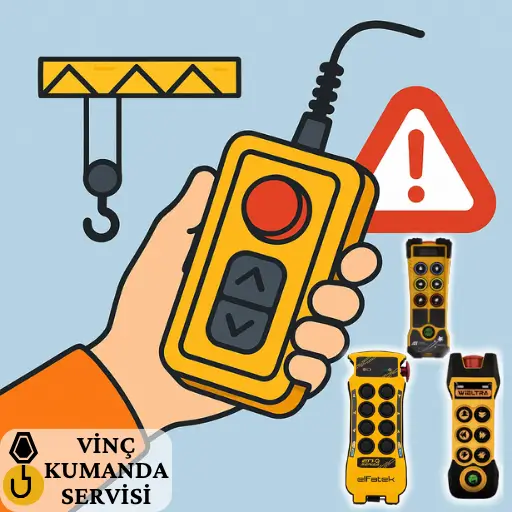
What Is OHS Mode in a Crane Remote Control?
OHS mode is a safety operating configuration that ensures a crane remote control system meets occupational health and safety requirements. Its primary purpose is to reduce operator error and make crane control predictable and safe under all conditions — including when the operator makes a mistake. An OHS mode crane remote control system incorporates several mandatory safety functions working together:
- Emergency Stop (E-STOP): Immediate, guaranteed crane arrest through a redundant safety relay circuit — not a single-point electrical cut.
- Signal Loss / Out-of-Range Protection: Automatic crane stop when communication between transmitter and receiver is interrupted for any reason.
- Unauthorised Use Lock: Prevents crane activation by anyone other than the designated operator — through key switch, magnetic key, or RFID authorisation.
- Deadman Safety Function: The crane stops automatically if the operator releases the control — requiring continuous conscious activation to maintain crane movement.
- Single-Motion Interlock: The system accepts only one direction of movement at a time, rejecting simultaneous multi-axis commands. This is the most operationally significant OHS mode function.
The Critical Safety Function: Single-Motion Interlock
When OHS mode is discussed in the crane industry, the single-motion interlock is the defining feature — the one that changes outcomes in real incidents. An operator can unintentionally press two buttons simultaneously. The scenario is straightforward: while hoisting a load, the operator’s hand shifts slightly and makes contact with the traverse or travel button. Without OHS mode, the crane executes both commands at once — the load swings, the crane bridge travels under a moving load, and the consequences include load swing into surrounding structures, derailment, beam collision, personnel injury, and equipment damage.
How the Single-Motion Interlock Works
The OHS mode interlock operates through software-level command sequencing in the transmitter and receiver:
- The first detected button input is accepted and executed.
- All simultaneously pressed buttons are rejected — the system does not queue them.
- The second command is only accepted after the first motion is completed and the button is released.
- The crane moves on a single axis at any given moment — no exceptions.
The Wieltra EVO612 OHS Mode is the most widely referenced implementation of this feature — its sequential motion lock software prevents conflicting simultaneous commands at the firmware level. See the Wieltra crane remote control range for full technical specifications.
Is OHS Mode Crane Remote Control Legally Required?
OHS and health and safety regulations in most industrial jurisdictions do not specify “OHS mode crane remote control” by name. What they do mandate — consistently and without exception — are the safety outcomes that OHS mode delivers. Under the EU Work Equipment Directive (2009/104/EC) and equivalent national OHS legislation, crane control systems must provide:
- Emergency stop capability
- Safe control behaviour — no unintended crane movement from operator error
- Automatic crane stop on signal loss
- Reduction of operator error risk identified in the facility risk assessment
The practical consequence is direct: if a facility’s risk assessment identifies multi-command operator error or uncontrolled load movement as a risk — and for overhead crane operations, it always should — then the safety functions provided by OHS mode become legally mandatory, even if the regulation does not use that specific term. A crane remote control that does not include single-motion interlock, E-STOP with redundant relays, and signal-loss protection does not meet the required safety standard regardless of its CE marking.
Operational Advantages of OHS Mode Crane Remote Controls
The benefits of OHS mode crane remote controls extend beyond regulatory compliance — they produce measurable operational improvements that affect production efficiency, equipment longevity, and maintenance costs.
- Maximum operator safety: Multi-command interlock, redundant E-STOP, and automatic signal-loss response together reduce the operator’s ability to create a hazardous condition to near zero.
- Load swing prevention: Single-axis operation eliminates the pendulum effect caused by simultaneous hoist and travel commands — the primary cause of load-into-structure collisions.
- Reduced incident rate: Fewer physical incidents directly translate to lower insurance premiums, reduced equipment repair costs, and elimination of production downtime from crane-related accidents.
- Regulatory compliance: A facility operating OHS mode crane remote controls demonstrates documented safety measures in inspections — the difference between a clean audit and a corrective action requirement.
- Improved operational efficiency: Operators working with predictable, safety-interlocked controls make fewer positioning corrections. Load placement cycle times improve — a quantifiable productivity gain in high-cycle production environments.
What to Verify Before Purchasing an OHS Mode Crane Remote Control
Not every product labelled “OHS mode” or “safety mode” delivers the same level of protection. The following checklist covers the specific functions that must be present and verifiable in any system you evaluate:
- Single-motion interlock confirmed: Does the system reject simultaneous multi-button inputs at the firmware level — not just mechanically?
- Redundant emergency stop circuit: Is the E-STOP implemented with dual safety relays and microprocessor cross-monitoring, or is it a single-circuit button?
- Signal-loss automatic stop: Does the crane arrest automatically when the heartbeat signal is interrupted — with a documented response time?
- Deadman function present: Is continuous operator activation required to maintain crane motion?
- EN standard compliance documented: Can the supplier provide ISO 13849-1 (PL-d) or IEC 62061 (SIL 2) safety assessment documentation — not just CE Declaration of Conformity?
- Spare parts, service, and field support available: A safety-critical system requires a service partner who can provide replacement components and technical support on short lead times.
Vinç Kumanda Servisi supplies, installs, and services OHS mode crane remote control systems from Wieltra, Elfatek, Aykos, and other brands across all seven product lines. For a full overview of available crane remote control services including installation and commissioning support.
Conclusion
OHS mode crane remote control is not a premium feature — it is the minimum safety standard for any overhead crane operating in a production or industrial environment. The single-motion interlock alone addresses the majority of crane incident causes. Combined with redundant emergency stop, signal-loss protection, and operator authorisation, OHS mode transforms crane remote control from a motion-control device into a safety system. The procurement decision should start with confirming these functions are present and certified — not with comparing unit prices between systems that may not deliver equivalent safety performance.
Conclusion
OHS mode crane remote control is not a premium feature — it is the minimum safety standard for any overhead crane operating in a production or industrial environment. The single-motion interlock alone addresses the majority of crane incident causes. Combined with redundant emergency stop, signal-loss protection, and operator authorisation, OHS mode transforms crane remote control from a motion-control device into a safety system. The procurement decision should start with confirming these functions are present and certified — not with comparing unit prices between systems that may not deliver equivalent safety performance.
Frequently Asked Questions
What does OHS mode mean on a crane remote control?
OHS (Occupational Health and Safety) mode is a safety configuration that incorporates a defined set of protective functions — single-motion interlock, redundant emergency stop, signal-loss automatic arrest, deadman function, and operator authorisation lock. Together these functions ensure the crane behaves safely regardless of operator error or system fault. The term is used in Turkish and European industrial contexts; internationally it is also referred to as safety mode or safety interlock mode.
What is the single-motion interlock and why is it the most important OHS feature?
The single-motion interlock prevents the crane from executing more than one direction of movement simultaneously. When the operator presses two buttons at the same time — intentionally or accidentally — the system accepts only the first input and rejects all others until it is released. This eliminates load swing caused by simultaneous hoist and travel commands, which industry data identifies as the cause of approximately 70% of crane-related incidents.
Is OHS mode crane remote control legally required?
OHS regulations do not require a product named “OHS mode” — they require the safety outcomes it delivers: emergency stop, signal-loss protection, safe control behaviour, and reduction of operator error risk. Where a facility risk assessment identifies multi-command error or uncontrolled load movement as a hazard — which is standard for overhead crane operations — the functions provided by OHS mode become legally mandatory regardless of the specific terminology used.
Does CE certification confirm OHS mode compliance?
No. CE marking confirms compliance with radio equipment and EMC directives — it does not certify the safety function architecture. OHS mode safety functions are verified through ISO 13849-1 (PL-d) or IEC 62061 (SIL 2) documentation. Always request these safety assessment documents separately from the CE Declaration of Conformity when evaluating a system.
What happens if the crane remote loses signal in OHS mode?
In a properly implemented OHS mode system, signal loss triggers an automatic emergency stop — the crane arrests all motion immediately. The continuous heartbeat signal between transmitter and receiver is monitored in real time; any interruption, whether from interference, range exceedance, or battery failure, is detected within milliseconds and the system enters fail-safe mode. The crane does not continue executing the last command.
What is the deadman function in a crane remote control?
The deadman (or man-dead) function requires the operator to maintain continuous conscious activation of the control — typically through a trigger button or grip pressure switch — for the crane to remain in motion. If the operator releases the control for any reason, including incapacitation, loss of balance, or emergency evacuation, the crane stops automatically. This function prevents uncontrolled crane movement if the operator is no longer actively controlling the system.
Which crane remote control brands offer OHS mode?
Among the brands supplied by Vinç Kumanda Servisi, Wieltra’s EVO612 OHS Mode set is the most technically advanced implementation — its sequential motion lock operates at firmware level and is patent-protected. Elfatek systems offer operator authorisation through the Security Key function. All brands in the Vinç Kumanda Servisi catalogue — Elfatek, Wieltra, Aykos, Mikotek, Henjel, and Remobat — include the core OHS safety functions of redundant E-STOP and signal-loss protection as standard.
Can OHS mode be added to an existing crane remote control?
OHS mode is a firmware and hardware architecture — it cannot be added to a system that was not designed to include it. A remote control without single-motion interlock or redundant relay E-STOP cannot be retrofitted to OHS mode standard through software update alone. The correct approach for upgrading an existing crane to OHS mode standard is a full control system retrofit — replacing both the remote control unit and the receiver/relay panel with a certified OHS mode system.
Does OHS mode slow down crane operations?
No — and in practice, it often improves cycle times. The single-motion interlock does add a brief sequence between motion commands, but this is measured in milliseconds. The productivity gain comes from eliminating the time lost to load swing correction, repositioning after multi-command errors, and recovery from minor incidents. Operators working with OHS mode systems consistently achieve more precise load placement on the first attempt, reducing total cycle time per lift.
What is operator authorisation lock in an OHS mode system?
Operator authorisation lock prevents the crane from being activated by anyone other than a designated, trained operator. Implementation varies by brand: Telemmote uses a magnetic key (Power Key) system; Elfatek Kuğu series uses RFID; Wieltra uses a key switch. In multi-shift facilities where multiple operators share crane equipment, this function ensures that only personnel who have completed training and authorisation can operate the crane — an OHS requirement in many jurisdictions.
How does OHS mode relate to PL-d and SIL 2 certifications?
OHS mode describes the operational safety features of a crane remote control. PL-d (ISO 13849-1) and SIL 2 (IEC 62061) are the engineering standards that certify the reliability of those safety features — specifically the emergency stop and fail-safe response mechanisms. A complete OHS mode system should have both: the functional features (single-motion interlock, deadman, signal-loss stop) and the certified reliability architecture (PL-d or SIL 2 documentation). Neither alone is sufficient without the other.
Contact Vinç Kumanda Servisi
Need help selecting an OHS mode crane remote control for your facility, or looking to upgrade an existing system to current safety standards? Contact Vinç Kumanda Servisi via WhatsApp at +90 532 546 84 62, email us at info@vinckumandaservisi.com, or visit our contact page for a tailored quote.