Hydraulic System Remote Control: Applications, Selection Guide and Retrofit Options
Hydraulic systems form the operational core of heavy machinery across construction, mining, agriculture, and industrial sectors. Adding wireless remote control to these systems delivers two immediate benefits: the operator works from a safe distance rather than at the machine side, and precision control improves because the operator can position freely around the work area. This guide covers the practical advantages of hydraulic remote control, how to select the right system, and — critically — how existing manual hydraulic lever systems can be converted to wireless operation without replacing the valve group.
Get in Touch for All Your Requirements
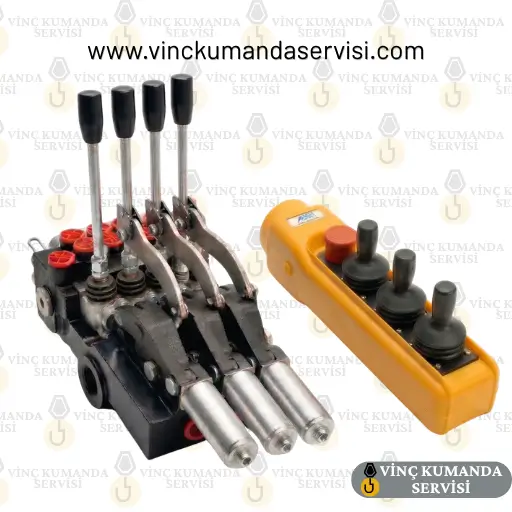
Advantages of Wireless Remote Control for Hydraulic Systems
Wireless remote control transforms how hydraulic machinery is operated. However, the benefits extend beyond simple convenience — they directly affect safety performance, job cycle times, and operational flexibility in ways that manual lever control cannot match.
Safety Improvement
Manual hydraulic lever operation requires the operator to stand immediately next to the machine during all functions. In high-risk environments — urban roadside recovery, confined construction sites, or operations near overhead hazards — this proximity creates direct exposure to the primary risk zone. Wireless remote control removes this constraint. As a result, the operator can stand at the safest available position while retaining full control of all machine functions.
Furthermore, emergency stop functionality — accessible from the remote control regardless of where the operator is standing — provides an additional safety layer that manual lever systems cannot replicate. The operator does not need to reach the machine to arrest all hydraulic movement in an emergency.
Operational Efficiency
Wireless control allows the operator to maintain the best sightline to both the machine and the work area simultaneously. In practice, this reduces positioning errors and eliminates the back-and-forth repositioning that manual lever operation requires. Job cycle times shorten, and tasks in confined or difficult-access areas become viable for single-operator completion.
Operational Flexibility
Multiple control modes — including variable speed adjustment — allow the operator to switch between precision fine control and faster coarse movement without reconfiguring the system. Consequently, the same remote control handles both delicate positioning tasks and high-speed bulk movement sequences, adapting to the specific demand of each job phase.
Converting Manual Hydraulic Levers to Wireless: Retrofit Conversion Kits
A common assumption in the industry is that adding wireless control to an existing manual hydraulic system requires replacing the entire valve group — a costly and disruptive process. However, this is no longer the case. Next-generation retrofit conversion kits are specifically designed to add wireless capability to existing manual lever systems without touching the hydraulic circuit.
How the Hidro-Kol Retrofit System Works
The Hidro-Kol system uses servo motors that mount externally onto existing manual hydraulic lever arms. The servo motors replicate the lever movement wirelessly — no modification to the hydraulic valves, no oil drainage, and no welding or structural alteration to the machine. The wireless joystick transmitter sends commands to the servo motors, which actuate the levers exactly as the operator’s hand would. As a result, the full existing hydraulic circuit functions unchanged, now with the added option of wireless remote operation.
For full technical specifications and current pricing, see the hydraulic system remote controls page.
Key Features of the Retrofit Approach
- No modification required: The conversion kit mounts externally onto the existing lever system. No welding, no structural changes, and no hydraulic circuit interference.
- Hybrid manual/automatic operation: If the remote control battery depletes or a fault occurs, the manual levers remain fully functional. The machine never becomes inoperable — a critical advantage for commercial fleet operators where machine downtime has direct financial consequences.
- Wide compatibility: The system is compatible with construction machinery, cranes, aerial work platforms, and recovery vehicles — any equipment with a standard manual hydraulic lever configuration.
Selecting the Right Remote Control for Hydraulic Systems
Hydraulic machinery operates across a wide range of environments and application types. Therefore, the selection criteria for hydraulic remote controls are more specific than for standard electric crane remotes. The following parameters should be evaluated systematically.
Signal Stability and Interference Resistance
Hydraulic machinery typically operates in demanding electromagnetic environments — construction sites with generators and power tools, urban areas with dense wireless traffic, and industrial sites with motor drives and welding equipment. Consequently, specify a system with FHSS (Frequency Hopping Spread Spectrum) technology for reliable signal performance across all these conditions. Fixed-frequency systems are more vulnerable to intermittent interference from nearby equipment.
Ergonomic Design for Extended Use
Hydraulic machine operators often use remote controls for extended periods during a single job. In this context, unit weight, grip design, and button layout directly affect fatigue and error rate. Specifically, a remote that requires the operator to look at it during use — rather than keeping eyes on the work area — introduces a safety risk that correct ergonomic design eliminates. Prefer units in the 500–700 g range with clearly differentiated button groups for distinct function categories.
Environmental Durability
Hydraulic machinery operates outdoors, in dusty environments, and often near water. As a result, IP65 is the minimum ingress protection rating for any hydraulic remote control — it confirms complete dust exclusion and resistance to water jets. For coastal, port, or wash-down environments, IP67 is the appropriate specification. Systems below IP65 will require early replacement in these conditions, which eliminates the cost advantage of the lower initial price.
Multi-Function Control Capability
Hydraulic systems on modern machines often require simultaneous or sequential control of multiple functions — crane slew, platform raise, outrigger deployment, and winch operation may all need to be accessible from the same remote. Therefore, map every required function before specifying the button count. A system specified with insufficient buttons cannot be upgraded without full replacement.
Battery Performance and Spare Availability
Li-ion rechargeable batteries are the correct specification for hydraulic remote controls used in continuous or extended-shift applications. They maintain performance in cold and wet conditions where alkaline cells fail. In addition, confirm spare battery pack availability from the supplier before purchase — a flat battery mid-job is a direct operational problem for mobile machinery that cannot be restarted until the remote is operational again.
Modular Design and Spare Parts
A modular remote control system allows individual component replacement when a specific part fails — rather than requiring complete unit replacement. In practice, this means a failed button module or receiver board can be replaced at component cost, rather than the full system cost. Consequently, confirm modular repairability and local spare parts availability before committing to a hydraulic remote control product for fleet use.
How Wireless Remote Control Improves Hydraulic System Efficiency
The efficiency gains from wireless hydraulic remote control are most visible in three specific operational scenarios. First, in tasks requiring the operator to observe both the machine function and the work result simultaneously — loading, positioning, and placing operations where the operator’s position relative to the machine determines whether the job is done correctly on the first attempt. Second, in confined or restricted-access areas where a fixed-position operator cannot maintain sightlines to all relevant points. Third, in single-operator operations where wireless control eliminates the need for a second crew member to signal or guide the machine operator.
In all three scenarios, the efficiency gain is directly measurable: fewer repositioning moves, shorter job completion time, and reduced crew requirement per task. Furthermore, regular maintenance of the remote control system — cleaning, battery management, and scheduled service checks — preserves these efficiency gains across the system’s service life rather than allowing gradual degradation to erode the initial benefit.
Conclusion
Wireless remote control for hydraulic systems is no longer limited to new machine specification — retrofit conversion kits make it accessible for existing equipment without valve group replacement or hydraulic circuit modification. The selection criteria are straightforward: match IP rating to the operating environment, specify button count to cover all machine functions, confirm FHSS signal technology for interference-dense conditions, and verify spare parts availability before purchase. For operations where machine availability is critical, the hybrid manual-plus-wireless architecture of retrofit systems provides a specific additional advantage — wireless failure does not mean machine failure.
Frequently Asked Questions
Can I add wireless remote control to my existing manual hydraulic system?
Yes. Retrofit conversion kits — specifically the Hidro-Kol system — mount servo motors externally onto existing manual hydraulic lever arms. The servo motors actuate the levers wirelessly, providing full remote operation without modifying the hydraulic valves, draining oil, or making structural changes to the machine. The existing manual levers remain functional as a fallback.
Does converting to wireless mean I lose manual control of the hydraulics?
No — with the Hidro-Kol retrofit system, the manual levers remain fully operational at all times. If the wireless remote battery depletes or a fault occurs, the operator reverts to manual lever control immediately. This hybrid architecture means the machine is never stranded because of the wireless system.
What IP rating does a hydraulic remote control need?
IP65 is the minimum for hydraulic machinery applications — it confirms complete dust exclusion and water jet resistance. For port, coastal, or wash-down environments, IP67 adds submersion resistance. Hydraulic machinery operates in conditions that degrade lower-rated units quickly, making the IP rating a primary selection criterion rather than a secondary specification.
What is the operating range of a wireless hydraulic remote control?
Most hydraulic remote controls for mobile machinery provide 50–150 m effective range in open conditions. However, urban environments and sites with dense metal structures reduce effective range below the nominal figure. Therefore, specify a system with at least 50% more nominal range than your maximum required operating distance to ensure reliable coverage at the working boundary.
Which machines are compatible with the Hidro-Kol retrofit kit?
The Hidro-Kol system is compatible with any machine using standard manual hydraulic lever valve controls — including construction machinery, cranes, aerial work platforms (mobile elevating work platforms), and recovery vehicles. The servo motors mount onto the lever arms regardless of machine brand or model, making it a universal retrofit solution for manual hydraulic systems.
Does the retrofit conversion require hydraulic system modification?
No. The Hidro-Kol system mounts externally — no welding, no structural changes, no oil drainage, and no modification to the hydraulic valve group. The conversion is entirely mechanical at the lever interface level. As a result, the existing hydraulic certification and warranty of the machine are not affected by the installation.
What frequency does a wireless hydraulic remote control use?
433 MHz and 868 MHz are the standard industrial frequency bands — both licence-free under ETSI in Europe and resistant to the interference typical of construction and industrial sites. Systems with FHSS technology continuously change frequency to avoid interference sources. For operations in urban areas or sites with dense wireless traffic, FHSS is a specific requirement rather than an optional feature.
How does wireless hydraulic control improve single-operator efficiency?
Wireless control allows the single operator to manage the machine from the position that provides the best combination of safety and work visibility. In practice, tasks that previously required a second crew member for signalling or guidance become viable for solo completion. Furthermore, the operator can reposition between machine functions without returning to a fixed lever location, reducing overall job cycle time.
What maintenance does a wireless hydraulic remote control require?
Standard maintenance includes battery level checks at the start of each shift, weekly button and housing cleaning with a damp cloth, drop protection through a belt holster or lanyard, and periodic transmitter-receiver synchronisation checks per the manufacturer’s schedule. Specifically, do not use solvents or compressed air for cleaning — both can damage seals and internal components. For retrofit servo motor systems, additionally check external mounting fasteners monthly for vibration-induced loosening.
Can Vinç Kumanda Servisi supply hydraulic remote controls for machines outside Turkey?
Yes. Vinç Kumanda Servisi supplies hydraulic remote control systems and Hidro-Kol retrofit conversion kits internationally. Contact us with the machine type, hydraulic function count, operating environment, and any specific certification requirements — and we will provide a compatible system specification and pricing proposal.
Contact Vinç Kumanda Servisi
Looking for a wireless remote control system for your hydraulic machinery, or interested in converting an existing manual system with a retrofit kit? Contact Vinç Kumanda Servisi via WhatsApp at +90 532 546 84 62, email us at info@vinckumandaservisi.com, or visit our contact page for a tailored quote.