Crane Remote Control Upgrade: 3 Reasons to Replace Old Systems and the 5-Step Process
Upgrading an old wired or limited-motion crane remote control to a modern wireless system is rarely driven by a single reason. Safety gaps, unavailable spare parts, operator inefficiency, and increasing fault frequency are all signals that the upgrade decision can no longer be deferred. This guide covers the three core reasons why old systems create operational risk and cost, and the five sequential steps our service team uses to execute upgrades with minimal crane downtime.
Get in Touch for All Your Requirements
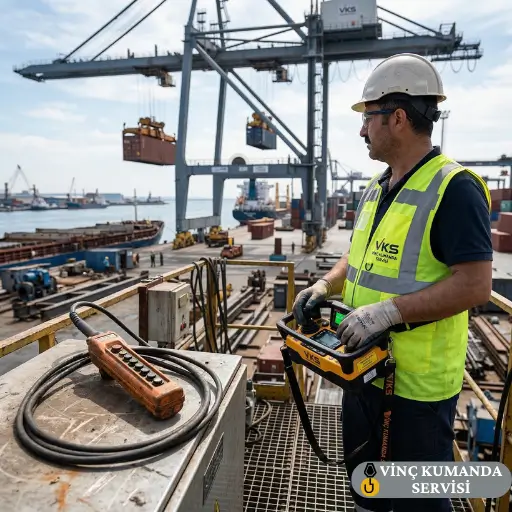
3 Reasons Old Crane Remote Controls Must Be Replaced
Old wired or single-motion crane remotes create three distinct operational problems — performance loss, safety exposure, and parts unavailability. Furthermore, these problems compound each other: a system with limited motion capability forces the operator to work closer to the load, and a system without available spare parts forces continued operation of a degraded unit that increases all three risks simultaneously. The upgrade decision made before fault frequency increases is consistently less expensive than the same decision made after a crane stoppage.
Reason 1: Performance and Cycle Time
Old-type crane remotes typically support only two motions — hoist up and hoist down. Modern RF wireless systems control 4 to 10 independent motions simultaneously. Consequently, bridge and gantry crane cycle times — the time from pick-up to set-down and return — are directly reduced. Our field observations consistently show a 25–30% improvement in crane operation cycle time when upgrading from single-motion to multi-motion control. For production operations where the crane is a throughput constraint, this improvement directly translates to measurable output increase without any other investment.
Reason 2: Safety — Operator Distance and Modern Protection Features
Wired pendant systems constrain the operator to the cable length — which means the operator is standing in close proximity to the load at all times. In the event of load swing, cable failure, or unexpected hoist motion, the operator’s reaction distance is the cable length — which is often insufficient. Wireless remote control systems with 50–100 m operating range allow the operator to position outside the load hazard zone entirely, removing this constraint. Furthermore, modern systems include emergency stop circuits, watchdog communication monitoring, and drop protection as standard features. These are not optional safety upgrades — they are the baseline safety architecture that OHS regulations increasingly require and inspect for. For a technical breakdown of E-stop requirements, see our crane remote control emergency stop guide.
Reason 3: Spare Parts Unavailability
For crane remote controls more than 10 years old, original spare parts are frequently no longer available from the manufacturer. As a result, when a fault occurs, the crane goes out of service with no repair path — and the entire facility operation may be affected while a replacement system is procured on an unplanned basis. CE-certified modern systems with active service networks eliminate this risk entirely. Specifically, a planned upgrade on a scheduled maintenance window costs significantly less than an emergency system replacement following an unplanned failure, because the downtime is controlled and the procurement is not rushed.
The 5-Step Crane Remote Control Upgrade Process
A correctly planned crane remote control upgrade minimises crane downtime and avoids the technical problems that arise when steps are skipped. Each step in the process below builds on the previous one — and skipping any step creates problems in the next. The process reflects the standard upgrade procedure our service team applies in the field.
Step 1: Needs Analysis
Before any system is selected, the existing installation must be fully characterised: the current remote’s motion count, operating frequency, crane motor configuration, supply voltage, and operating environment — indoor, outdoor, or classified explosive atmosphere. Without this analysis, the replacement system may be incompatible with the crane’s motor or contactor configuration, producing either reversed motion or contactor overload immediately at commissioning. Specifically, the crane motor’s speed configuration — single-speed, dual-speed, or VFD-controlled — directly determines which receiver output architecture is required.
Step 2: System Selection
Based on the needs analysis, the replacement system is specified by motion count, speed type (single-speed, dual-speed, or proportional), IP protection class, and frequency band (433 MHz or 868 MHz). However, system selection must also consider the site’s electromagnetic environment — a facility with multiple welding machines or VFDs requires FHSS-capable systems, regardless of other specifications. For the full selection criteria framework, see our crane remote control selection criteria guide.
Step 3: Old System Removal and Wiring Documentation
The existing receiver unit and transmitter housing are removed from the crane. However, the critical step that is most frequently missed in field upgrades is wiring documentation before removal. The existing wiring schematic — or a full photographic record of the terminal connections before any cable is disconnected — must be completed before the first cable is touched. Furthermore, the crane must be de-energised and the voltage absence confirmed with a multimeter before any disconnection work begins. This is not a precautionary recommendation — it is the mandatory procedure under electrical safety regulations for work on live crane panels.
Step 4: New System Installation and Commissioning
The new receiver unit is connected to the crane control panel and the transmitter is paired with the receiver. Commissioning must verify four specific items before the crane is returned to service: every motion direction produces the correct crane movement; the emergency stop circuit arrests all motion within the specified response time; the signal range is confirmed at the maximum expected operating distance in the actual facility environment; and no-load function testing passes before any load is applied. For the complete commissioning test protocol, see our crane remote control installation guide.
Step 5: Operator Training
The new system’s button layout, security lock procedure, and emergency stop operation must be demonstrated to every operator who will use the crane — not distributed as a manual. Specifically, hands-on training rather than written instruction is required because the button layout of the new system will differ from the previous one, and operators accustomed to the old layout will revert to muscle memory under time pressure. Our field experience consistently shows that systems commissioned without operator training experience a significantly higher incidence of misuse-related faults within the first month of operation compared to systems where hands-on training was completed before handover.
When Should the Upgrade Happen?
The upgrade decision should not wait for a crane stoppage event. Specifically, three conditions each independently justify immediate upgrade planning: fault frequency has increased over the past 12 months; original spare parts are confirmed unavailable; or operators are reporting control-related safety concerns. When all three conditions are present simultaneously, the upgrade is overdue. A planned upgrade during a scheduled maintenance window consistently costs less than an emergency replacement following an unplanned crane failure — because the downtime is controlled, the procurement is not expedited, and the installation can be properly commissioned rather than rushed back into service. Vinç Kumanda Servisi manages the complete upgrade process — from needs analysis to installation, commissioning, and operator training — with a field service team. Contact us to receive a system recommendation matched to your crane type and operating environment.
Frequently Asked Questions
How long does a crane remote control upgrade take?
A standard upgrade — removal, installation, pairing, and commissioning testing — takes 2–4 hours per crane when the existing wiring schematic is available and the new system is prepared before arrival on site. Without existing wiring documentation, the removal phase is significantly longer because every connection must be traced and labelled before disconnection. Consequently, providing or requesting wiring documentation from the previous installation is the single most effective way to reduce upgrade downtime.
Does the old receiver unit always need to be replaced?
Not always. In some cases, only the transmitter hand unit needs replacement — if the existing receiver is compatible with the new transmitter and its condition is serviceable. However, compatibility between a new transmitter and an existing receiver is brand, model, and firmware specific — it cannot be assumed without technical verification. The needs analysis phase confirms whether the existing receiver can be retained or must be replaced, and the decision is based on verified compatibility data rather than assumption.
What warranty applies after a crane remote control upgrade?
New CE-certified crane remote control systems carry the manufacturer’s standard warranty — typically 1–2 years depending on the brand. Furthermore, the installation service warranty — covering the wiring and commissioning work — is documented separately. Request both in writing before the upgrade is authorised: the product warranty from the manufacturer and the installation warranty from the service team. These cover different aspects of the system and both are necessary for comprehensive post-upgrade protection.
Is there a compatible upgrade system for every crane type?
Yes. Bridge cranes, gantry cranes, jib cranes, and overhead cranes all have available upgrade system options with the correct motion count and technical specification. The needs analysis confirms which model configuration matches the specific crane — motion count, motor speed configuration, supply voltage, and IP class. There is no crane type for which a compatible modern wireless system does not exist, including cranes with non-standard motor configurations or older contactor logic that requires an interface relay between the receiver output and the existing control panel.
Is a special remote control required for explosive atmosphere (ATEX) environments?
Yes. Standard crane remote controls cannot be used in classified ATEX zones — even if they are IP65 or IP67 rated. ATEX and IECEx certified models are specifically designed to prevent ignition in atmospheres with flammable gases, vapours, or combustible dust. The ATEX category and equipment group must match the zone classification of the installation — this must be verified from the facility’s zone classification documentation before any system is specified. Selecting a standard system for an ATEX zone is a regulatory non-compliance that creates significant legal liability.
What happens if the upgrade is done without wiring documentation?
Without wiring documentation, the installation team must trace and label every existing connection before any cable can be safely disconnected — which adds 1–2 hours to the removal phase on a typical crane. More critically, unverified connections increase the risk of incorrect phase sequence in the new installation, which produces reversed crane motion or contactor damage at first power-on. Wiring documentation before removal eliminates both the time loss and this specific risk entirely. It is the single most valuable preparation step for any crane remote control upgrade.
Can a multi-crane facility be upgraded one crane at a time without affecting the other cranes?
Yes — and this is the recommended approach for multi-crane facilities. Upgrading one crane at a time keeps the production impact to a single crane’s downtime window per upgrade. However, when planning a phased upgrade, ensure each new system is assigned a unique frequency channel — or is FHSS-equipped — to prevent channel conflict between the new systems being installed and any existing systems still operating on fixed channels. Channel assignment planning for the full fleet should be completed before the first crane is upgraded, not addressed reactively after channel conflicts appear.
Contact Vinç Kumanda Servisi
Ready to upgrade an old wired or limited-motion crane remote control, or need a system recommendation matched to your crane type and environment? Contact Vinç Kumanda Servisi via WhatsApp at +90 532 546 84 62, email us at info@vinckumandaservisi.com, or visit our contact page. We manage the full upgrade process — needs analysis, installation, commissioning and operator training — with our field service team.